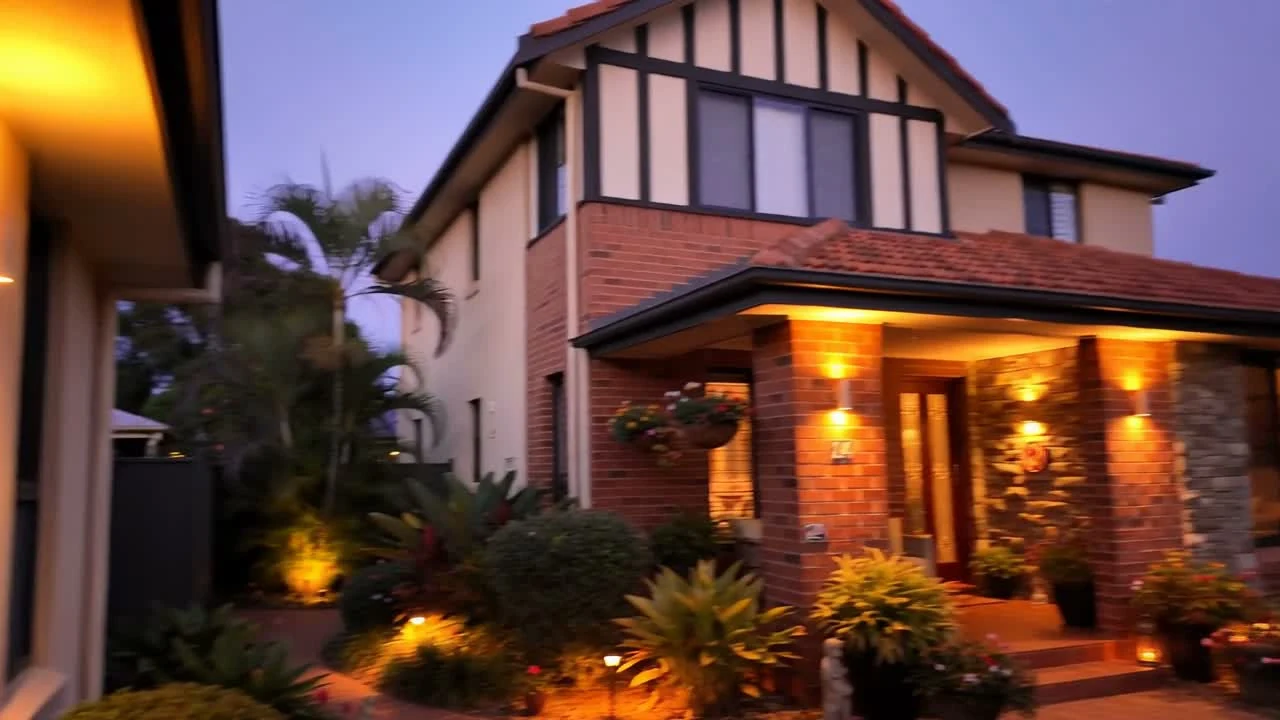
Quick answer: A villa lighting order for Australia has three pressure points that a catalogue will not warn you about. Exterior fittings have to survive the local conditions, which on the coast means salt air as much as rain. Anything electrical has to satisfy Australian compliance, and that conversation belongs at the start, not at the shipping stage. And the one or two custom pieces — usually over the staircase or the dining table — need their access and fixing checked while the house is still a frame. The project below ran into all three.
It started with a floor plan and a folder of screenshots
The first enquiry came from a builder working on a two-storey family home on the Queensland coast, a renovation with a new living area opening onto a pool. What he sent was a floor plan, an electrical layout marked up by hand, and a folder of screenshots the owners had collected over about a year. The message with them was practical: handover was fixed, the owners had opinions, and he did not want lighting to be the trade that held the job up.
On paper the list looked short. Downlights through the living areas and kitchen, pendants over the island and the dining table, wall lights up the staircase, something decorative in the entry, and a run of exterior fittings — façade, garden paths and the pool area. Sixty-one fittings in the first count. The number grew to seventy-four before the order was placed, most of the growth coming from the garden, which is what usually happens once somebody walks the block at dusk and realises how dark the far end of it is. Villa lighting solutions ↗
The exterior fittings were the wrong conversation about weather
The first real discussion was not about style. The house sits a few streets back from the water, close enough that cars in the street carry a film of salt and exterior hardware in the area ages quickly. The builder had already replaced corroded fittings on another job in the same suburb, and he raised it before we did.
That changed the exterior specification in three ways. The façade and garden fittings went to IP65 as a starting point rather than the IP44 that had been quoted from the screenshots. Fixings and visible metalwork on the outside fittings were specified in 316 stainless where they were exposed, and the powder-coat finish on the aluminium bodies was upgraded for coastal use. None of this was visible in a photograph of the finished house, and all of it would decide what the fittings looked like in four years.
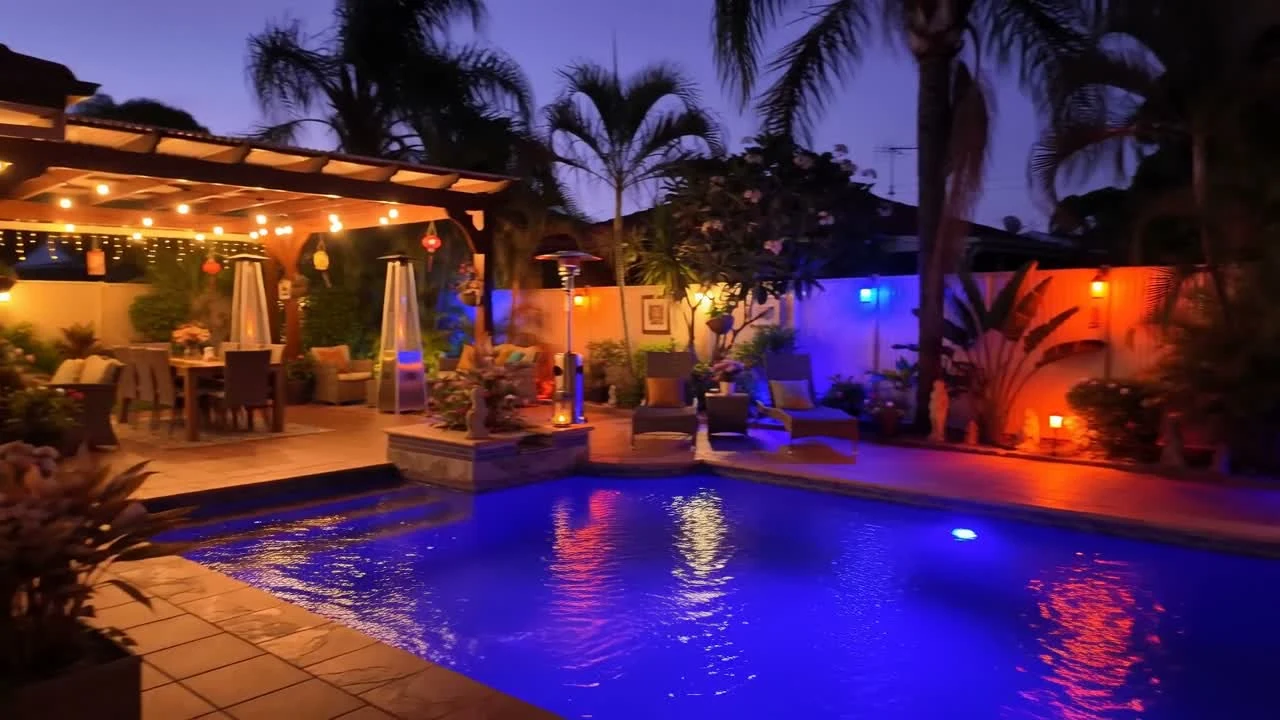
The pool area needed a separate conversation, and it is one worth having early on any Australian project. Fittings in and immediately around a pool sit inside regulated zones, so positions, voltages and IP ratings there were settled with the builder's licensed electrician, from the Australian rules that applied to that site, before anything for the pool was confirmed. A supplier can state a fitting's rating and supply its test documents. Where it may legally go in a pool zone is a local decision, and articles that pretend otherwise are not helping anyone. Outdoor lighting ↗
Compliance came up in week two, which is the right week
Australian buyers sometimes leave certification until the order is ready to ship. On this project the builder's electrician asked in the second week, and the job was easier for it.
What he wanted to know was straightforward: which fittings and drivers carried the documentation required for the Australian market, and whether test reports could be supplied for the models on the list. Most of the order was fine as specified. One group of fittings was not, because the driver paired with it did not have the documentation he needed, and that model was changed to a version he could accept while changing a driver was still a paperwork exercise. The same change three weeks before shipment would have meant either a partial air-freight bill or a conversation with the owners that nobody wanted.
If you are importing lighting into Australia, this is the single easiest improvement to make to your own process. Send the compliance question with the first version of the list, addressed to the electrician who will actually sign the job off. He is the person who has to accept the fittings, so there is little point discovering his requirements after he is standing in the driveway. Certifications ↗
A staircase, a pendant and a scaffold that was coming down
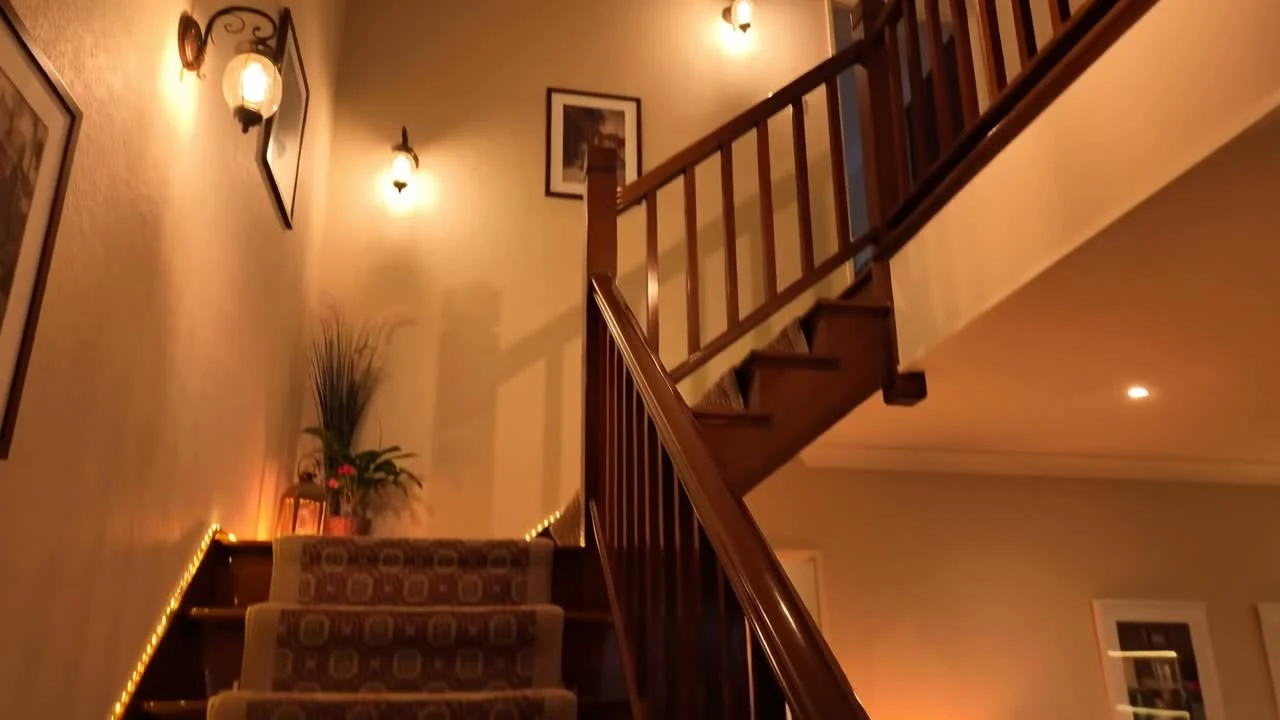
Inside, the piece everyone cared about was the pendant over the staircase void. The void is a little over six metres from the stair tread to the ceiling, and the owners had chosen a long, multi-drop pendant from their screenshots, to hang down through the space.
Two things had to be settled before it was made. The first was length: measured from the photo, the fitting would have hung lower than the handrail line at the turn of the stairs, which looks dramatic in a render and feels like an obstacle course in a house. The drop was shortened and the arrangement of the drops re-spaced so the lowest point cleared the turn comfortably. The second was timing. The pendant had to go in while the scaffold from the plastering was still standing, because re-erecting scaffold in a finished stairwell to hang one fitting is the kind of cost that appears on nobody's quote. Its installation date was worked backwards from the scaffold hire, and the fitting was packed and shipped with the first batch rather than the last one, which is the opposite of how decorative pieces usually travel. Custom lighting and OEM/ODM ↗
The owners also wanted to be able to change the drop later if they moved furniture around the entry. The suspension was made adjustable at the ceiling canopy, within a set range agreed on the drawing. That detail cost very little at the time. It was used, as it turned out, about a month after they moved in. Decorative lighting ↗
The living room problem was a television
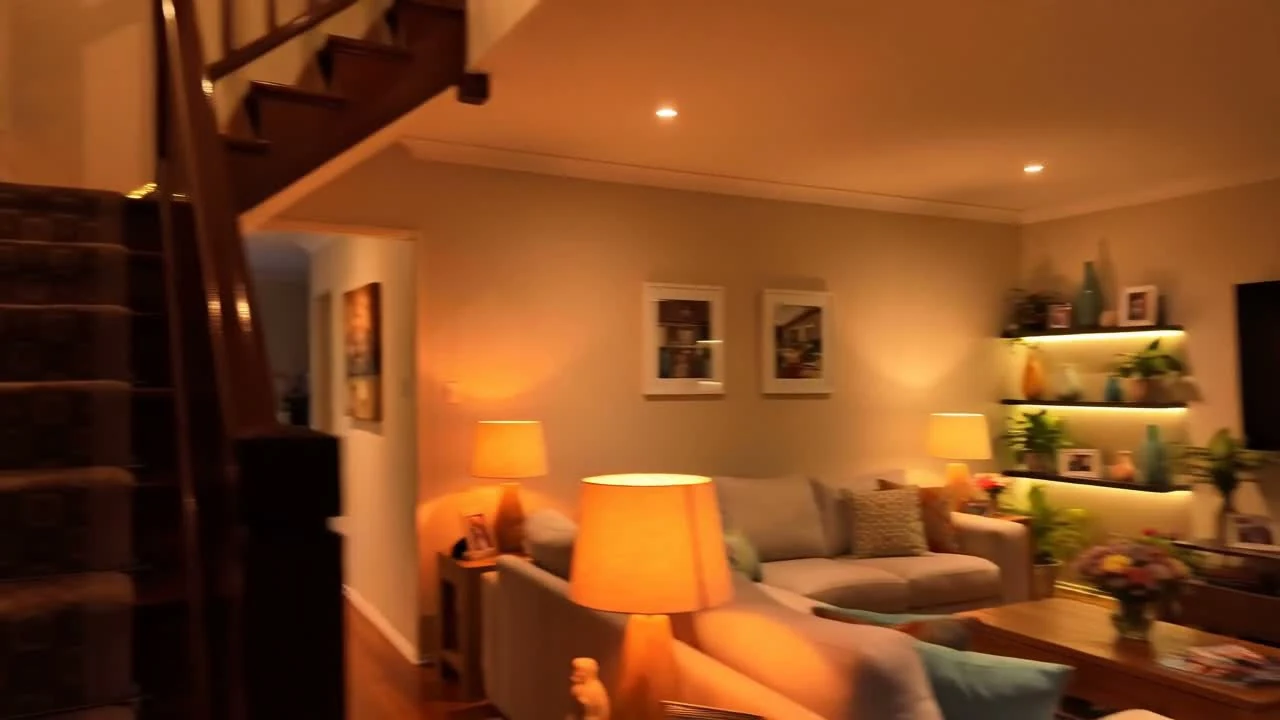
Not every problem on the job was technical. In the living room, the original layout put a row of downlights directly in front of the television wall, on the reasoning that more light over the seating area was better. The owners watch films in that room most nights, and a downlight reflected in a large screen is a small irritation that repeats every evening for years.
The layout changed instead of the fittings. The downlights came off the television axis and the room was lit in layers that could be separated: shelf lighting and table lamps for the evening scene, downlights for cleaning and for the middle of the day, and the wall lights by the doors on the same circuit as the garden, so the inside and outside read as one space when the doors are open. Colour temperature was set at 3000K through the living areas, with CRI 90 or above specified for the kitchen and dining fittings, where food and timber finishes are what the light is actually being judged on.
How it ended, including the two call-backs
Handover happened on the builder's date. The exterior fittings went through their first wet season without the early corrosion he had seen on the earlier job. The owners used the adjustable drop on the staircase pendant once, raising it slightly after a tall cabinet went into the entry, which took the electrician under an hour because the adjustment was at the canopy rather than inside the fitting.
There were two call-backs. The first was condensation inside one of the in-ground garden fittings about five weeks after installation. It was replaced from the spares supplied with the order, and the cause turned out to be a cable gland that had not been fully tightened during installation rather than a failed seal in the fitting itself, which was a useful thing to establish before anyone blamed the product or the installer in writing. The second was smaller: two of the pool-area wall lights had been ordered in the wrong finish, an error that was sitting in the confirmed schedule, so it was ours to fix. Replacements went by air with a later consignment for the same builder, and the wrong pair came back with his next sea shipment. Neither problem cost the owners a dark garden for a month, and the reason in both cases was the same, unglamorous one: spares and paperwork had been sorted while the order was still open.
Building or renovating a villa in Australia?
You do not need a finished lighting design to start a conversation with a villa lighting supplier, and you do not need one to get a useful answer. A floor plan, the electrical layout if you have it, and the reference photos most owners have been collecting anyway are enough for a first review. From those, we can separate the fittings that are standard from the one or two pieces that need to be made specially, flag anything on the list that raises a compliance, IP rating or coastal-finish question, and tell you honestly which parts of the job need a decision from your electrician rather than from us. Manufacturing and quality control ↗
That review is also the right moment to talk about timing. Sea freight, a scaffold coming down, a handover date that has already been promised to an owner — those dates decide the order of production more than the size of the order does.
FAQ
How much does villa lighting from China cost compared with buying locally in Australia?
It depends mainly on how much of the list is custom. Standard fittings bought as one coordinated order usually compare well even after freight, because finishes, colour temperature and drivers are matched across the whole house. The saving narrows on small orders and on anything that ends up air-freighted because a decision was made late, which is why the timing questions in this article matter as much as the unit prices.
What certification do I need for lighting imported into Australia?
Electrical products supplied in Australia have to meet Australian requirements, and the fittings and drivers on your list need the documentation your electrician and, where it applies, your certifier will ask for. Ask for it at the quoting stage, model by model. A supplier should be able to tell you clearly what documents exist for each fitting, and your licensed electrician is the right person to confirm that they are sufficient for your project.
Which IP rating do I need for outdoor villa lighting?
For exposed façade and garden positions, IP65 is a common starting point, while covered porch fittings may need less and fittings in pool zones are governed by specific rules that your electrician will apply to your site. On the coast, the rating is only half the question: fixing materials and finish specification decide how the fitting ages in salt air.
Can one supplier make both the standard fittings and a custom staircase pendant?
Yes, and for a villa it is usually the simpler arrangement, because the custom piece then matches the finish and colour temperature of everything around it. What matters is that the custom piece is scheduled separately, with its dimensions, drop, fixing and installation date agreed on a drawing, rather than carried as one more line in the general list.